 Skip to content

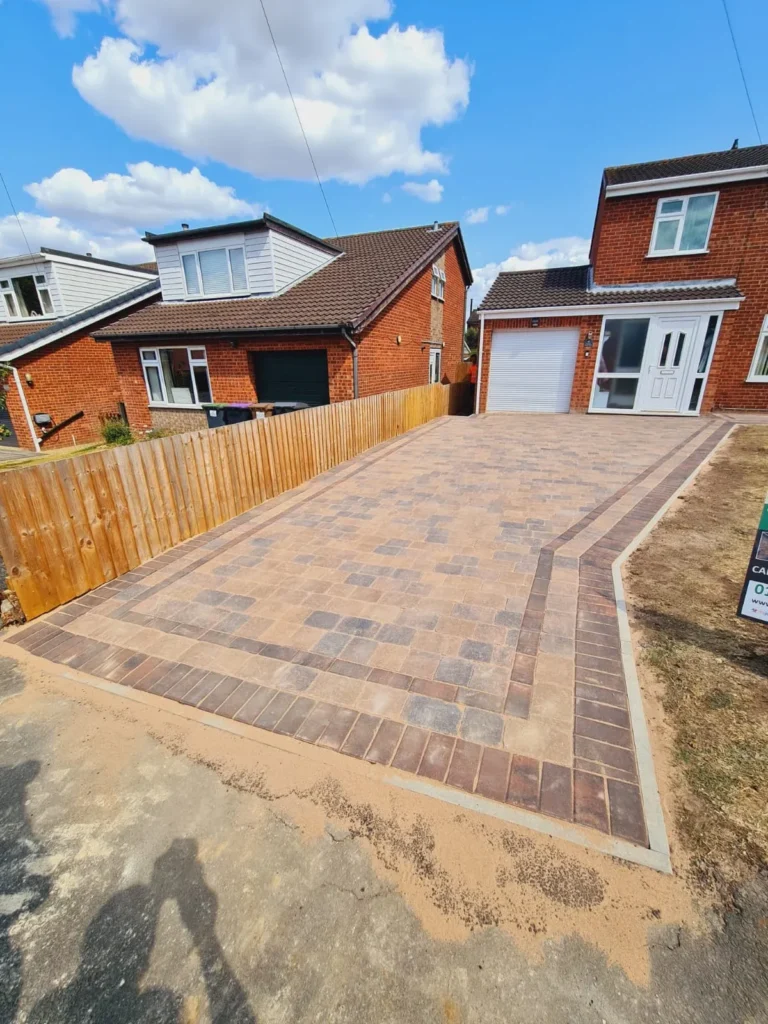
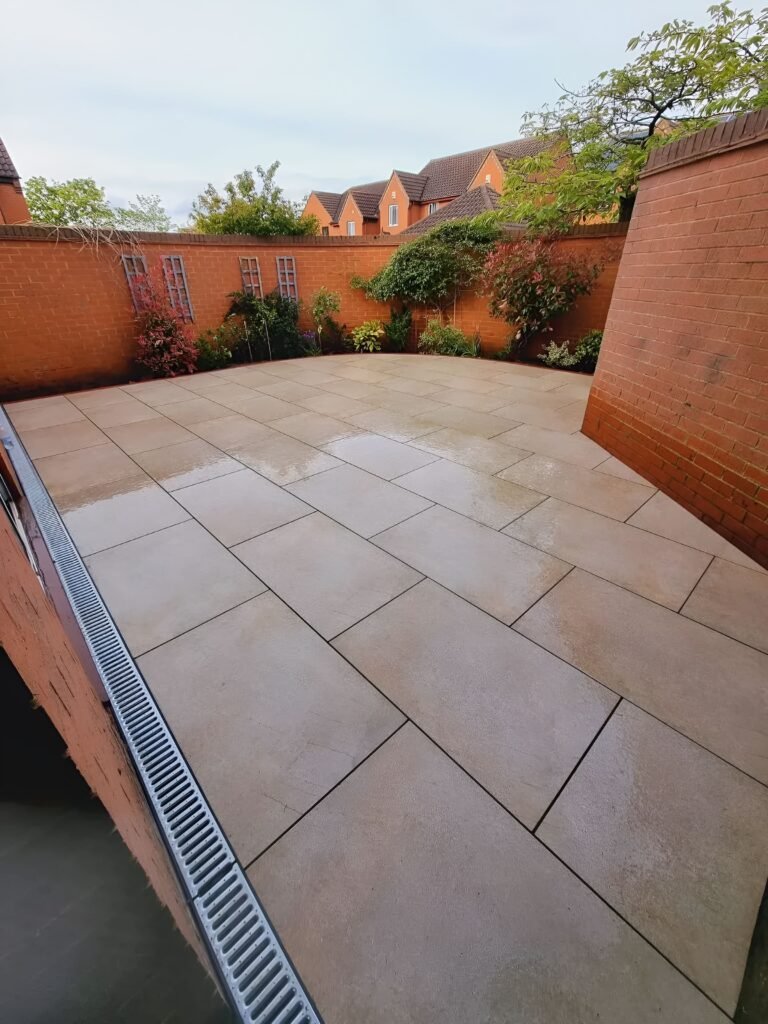

Puddles that never seem to drain, water running towards the front door, or a slippery green film where water sits after rain: these are some of the most common driveway complaints we hear. In most cases the problem is not the surface you can see but the way water is (or is not) being drained. A permeable driveway is one of the most effective ways to deal with it.
What is a permeable driveway?
A permeable driveway lets rainwater soak through the surface and into the ground below, instead of running off across the drive and into the road or towards the house. The water passes through the surface into a specially designed sub-base, where it is held and then drains away gradually into the ground.
A traditional solid driveway, such as standard tarmac, concrete or block paving laid on a sealed base, sheds water. That water has to go somewhere, which is why poor falls and blocked drains so often lead to puddles.
Why drainage matters
- Puddles and ice. Standing water is a slip hazard, and in winter it freezes.
- Damp. Water running towards the house can soak the walls and bridge the damp-proof course.
- Surface damage. Water that sits in dips gets into joints and cracks, and repeated freezing and thawing breaks surfaces up faster.
- Flooding. When large areas of front gardens are paved over with solid surfaces, more water ends up in drains and on roads during heavy rain.
The rules for front gardens
In England, the rules for paving front gardens are based on drainage. In most cases you will not need planning permission if the new surface is permeable, or if rainwater is directed to a lawn, border or soakaway within your property. If you lay a non-permeable surface over 5 square metres that drains onto the road, you will usually need planning permission. Different rules can apply to listed buildings and conservation areas. Our article on driveway planning permission in Surrey covers this in more detail.
Permeable driveway options
Resin bound
Stone mixed with clear resin and trowelled to a smooth finish. Water drains between the coated stones. It must be laid on a base that also lets water through. Read our comparison of resin bound vs resin bonded for more detail.
Permeable block paving
Looks very similar to standard block paving, but the blocks have wider joints filled with fine gravel instead of sand, and they are laid on an open-graded sub-base. Water drains down through the joints.
Gravel
Gravel is naturally permeable and one of the most affordable options. A stabilising grid underneath helps hold the gravel in place, stops ruts forming and makes it easier to walk on.
Porous asphalt
A specially designed tarmac with gaps in the mix that let water through. It needs a suitable permeable base and is less common on domestic drives than the options above.
What if I want a solid surface?
You can still have a non-permeable surface such as standard tarmac or block paving. The key is to plan where the water goes. Options include laying the surface with a fall towards a lawn or planted border, or installing a channel drain connected to a soakaway. What you should avoid is simply letting it run onto the road or towards the house.
The base is what makes it work
A permeable surface laid on the wrong base will not drain. For permeable systems, the sub-base is built from clean, open-graded stone that holds water and lets it drain gradually into the ground. Ground conditions also matter. On heavy clay soils, which are found in parts of Surrey, water drains away slowly, so the sub-base may need to be deeper or include an overflow to a soakaway. That is why we always look at the site and ground before recommending a system.
Looking after a permeable driveway
- Sweep regularly to stop leaves and soil clogging the surface.
- Remove weeds early, before they root into joints.
- Occasionally jet-wash or vacuum-clean resin and permeable paving, following the manufacturer’s advice, to keep the pores open.
- Avoid piling soil, sand or mulch on the drive, as fine material can block it.
Our guide on how to maintain your driveway has more tips for each surface type.
Which option suits your home?
There is no single best permeable driveway. Resin bound gives a smooth, seamless finish and suits modern and traditional homes alike. Permeable block paving has the classic look of block paving and can be repaired by lifting individual blocks. Gravel is the most affordable and suits rural and period properties, though it needs occasional raking and topping up. The right choice depends on the look you want, your budget, how the driveway is used and what the ground conditions are like. We can talk through the options on site and give you a written quote for each, so you can compare them properly before deciding.
Frequently asked questions
Can I make my existing driveway permeable?
Not usually without replacing it. In some cases, adding a channel drain or soakaway can solve drainage problems without replacing the whole surface.
Are permeable driveways strong enough for cars?
Yes. When the sub-base is designed and built correctly, permeable driveways are made for normal domestic vehicle use.
Will a permeable driveway get weeds?
Like any surface, weeds can grow where soil and debris collect. Regular sweeping keeps this to a minimum.
New driveways in Godalming and across Surrey
LF Roofing & Driveways installs resin, block paving, gravel and tarmac driveways across Godalming, Guildford, Farnham and the surrounding areas. Call 07311 065 336 for a free quote.
