 Skip to content


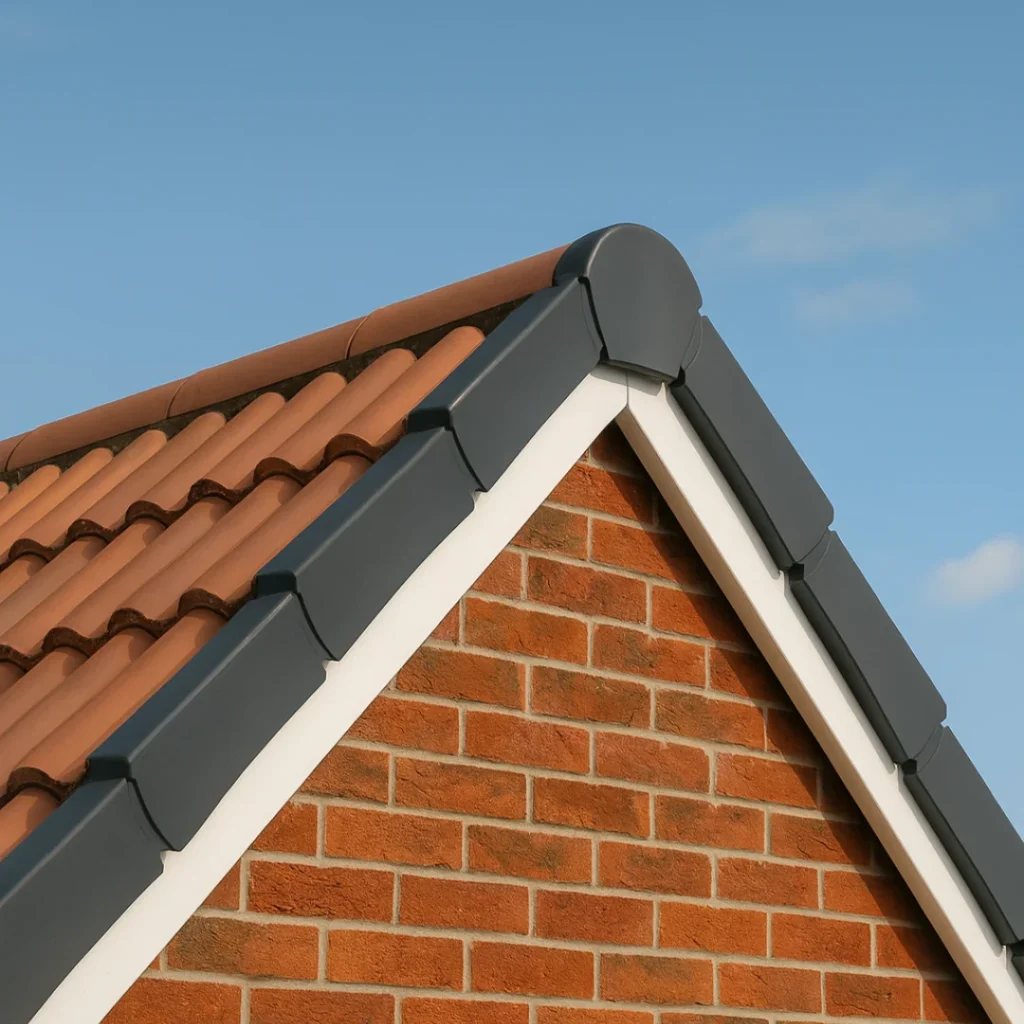
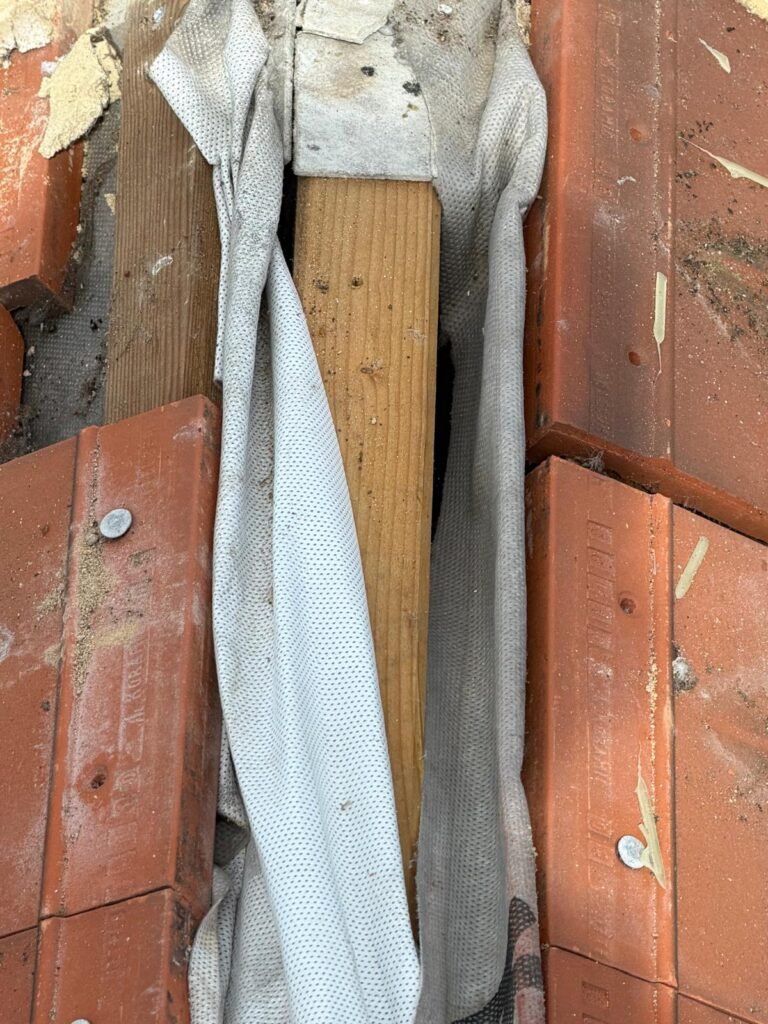


Fascias, soffits and gutters are easy to forget about until something goes wrong. Together they form the roofline: the boards and guttering along the bottom edge of your roof. Their job is to support the bottom row of tiles, carry rainwater away from the house and keep birds and weather out of the roof space. When they fail, the result is often damp walls, rot and leaks that seem to have nothing to do with the roof.
What each part does
- Fascias are the vertical boards fixed to the ends of the rafters. They support the gutters and the bottom row of tiles.
- Soffits are the horizontal boards underneath, closing the gap between the fascia and the wall. Many include vents to let air into the roof space.
- Gutters and downpipes collect the water running off the roof and carry it down to the drains.
7 signs your roofline needs attention
1. Peeling paint or soft, rotten timber
Many older houses in Surrey still have painted timber fascias and soffits. Once the paint fails, water soaks into the wood and it starts to rot. If you can push a screwdriver into the board, or pieces are breaking away, repainting will not fix it.
2. Gutters overflowing in heavy rain
Water spilling over the edge of the gutter usually means a blockage, a gutter that has dropped out of level, or a gutter that is too small for the roof area. Over time, overflowing water soaks the walls below.
3. Leaking joints and drips
Gutter joints rely on rubber seals that perish with age. Dripping from joints, or staining on the wall beneath them, is a sign the seals have failed.
4. Sagging gutters
Gutters that sag or pull away from the fascia often have broken brackets, or the fascia behind them has rotted and can no longer hold the fixings.
5. Damp patches on inside walls
Damp at the top of an upstairs wall, especially near the corner of a room, is often caused by an overflowing gutter outside rather than a roof leak.
6. Birds or pests getting into the roof
Gaps in damaged soffits are an easy way in for birds, squirrels and insects. Signs include nesting material, noises in the loft or droppings below the eaves.
7. Mould or condensation in the loft
Soffit vents allow air to flow through the roof space. If they are blocked or missing, moisture can build up in the loft. Replacing the soffits with ventilated boards can help.
Repair or replace?
Small problems can often be repaired: clearing a blockage, replacing a few brackets or resealing a joint. But if the timber is rotten in several places, gutters are leaking along their length, or the roofline is old and painted, replacing the whole run is usually better value. It is also far easier to do the fascias, soffits and gutters together than piece by piece.
What replacement involves
- Access. Scaffolding or suitable access equipment is put up so the work can be done safely.
- Removal. The old gutters, fascias and soffits are taken down, and the rafter ends are checked for rot.
- Repairs to timbers. Any damaged rafter ends are repaired so the new boards have something solid to fix to.
- Eaves protection. On many roofs, an eaves protection system or a new strip of underlay is fitted at the bottom of the roof so water drains cleanly into the gutter.
- New boards. New uPVC fascias and soffits are fitted, with vents where needed.
- New guttering. New gutters and downpipes are fitted with the correct fall to the outlets.
Why uPVC?
Most replacement fascias and soffits today are uPVC. It does not rot, does not need painting and only needs an occasional wash to keep it looking clean. It comes in a range of colours, including white, black, grey and woodgrain finishes, so it can be matched to your windows and doors.
Gutter guards: worth it?
If you have trees near the house, gutter guards can reduce the amount of leaves and debris that gets into the gutters. They do not remove the need for maintenance completely, as smaller debris and moss can still build up, but they can reduce how often gutters need clearing.
Looking after your roofline
- Clear gutters at least once a year, and twice if you have trees nearby.
- Check after heavy rain for overflowing or dripping.
- Wash uPVC fascias and soffits occasionally with warm soapy water.
- Get loose or sagging sections fixed early, before water damages the walls or timbers.
Matching the roofline to your home
Replacing the roofline is a chance to refresh the look of the house. White uPVC suits most properties, but anthracite grey and black have become popular on modern and renovated homes, and woodgrain finishes can work well on period and cottage-style properties. Gutters and downpipes come in matching colours and in different profiles, including traditional cast-iron-effect styles. It is worth checking the size of the guttering too: larger roofs, or roofs with valleys channelling water to one spot, may need a deeper gutter to cope with heavy rain.
Frequently asked questions
Can new fascias be fitted over the old ones?
Capping over old timber is sometimes offered as a cheaper option, but it hides the condition of the wood underneath. If the timber is rotten, it should be replaced rather than covered.
Do I need scaffolding?
For most roofline replacements, yes, so the work can be done safely and properly along the full length of the roof.
Will replacing the roofline stop damp on my walls?
If the damp is caused by overflowing or leaking gutters, yes. If it has another cause, such as a roof leak or rising damp, a proper inspection will identify it.
Fascias, soffits and gutters in Surrey
LF Roofing & Driveways replaces fascias, soffits and gutters across Godalming, Guildford, Farnham, Reigate and the surrounding areas. Call 07311 065 336 for a free quote.
