 Skip to content
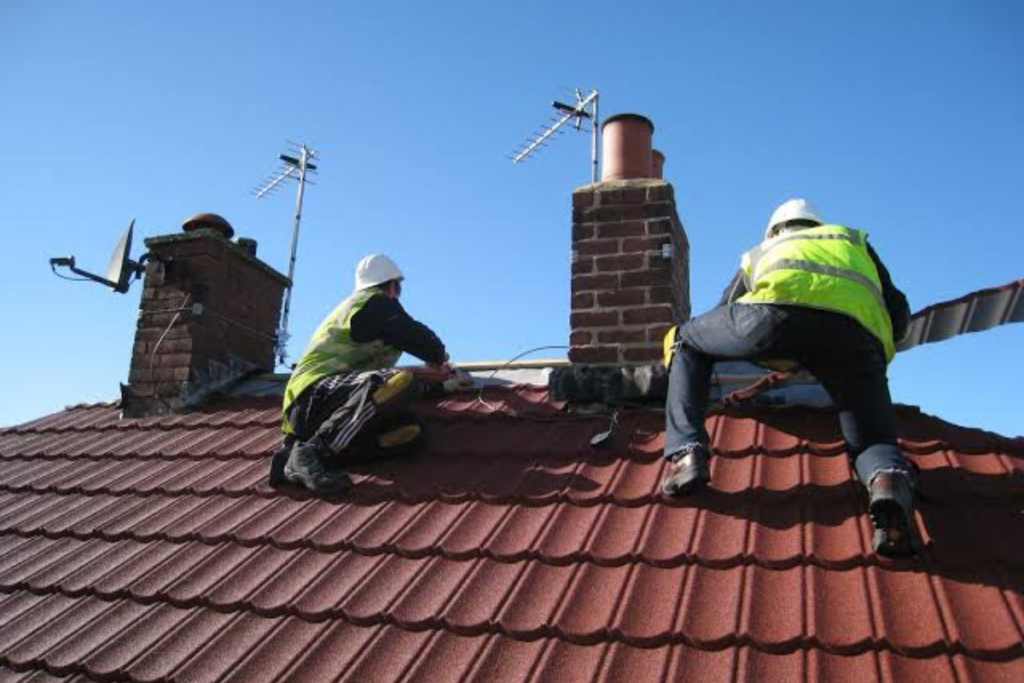

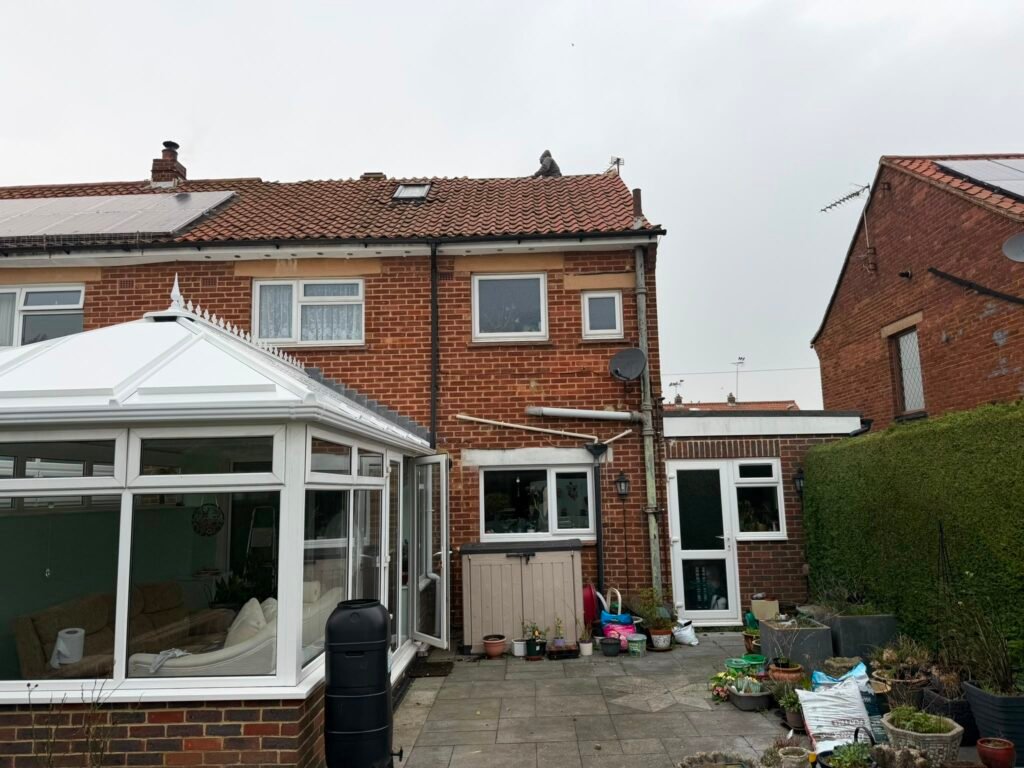

Most roof leaks are caused by one of a handful of problems: broken or slipped tiles, failed flashing around chimneys and walls, a cracked ridge, a worn valley, blocked gutters or an ageing underlay. The good news is that most of these can be repaired without replacing the whole roof — as long as they’re caught early.
The tricky part is that water rarely comes through the ceiling directly below the problem. It can run along rafters, battens and underlay for a metre or more before it drips, which is why a stain in your bedroom might start at a chimney on the other side of the roof.
In this guide, the team at LF Roofing & Driveways explains the 10 most common causes of roof leaks we see in Surrey homes, how to work out where yours is coming from, what each repair typically costs, and what to do while you wait for a roofer.
Roof Leak Causes at a Glance
| # | Cause | Where you’ll usually notice it | Typical repair cost in Surrey |
|---|---|---|---|
| 1 | Broken, slipped or missing tiles | Ceiling stains in upstairs rooms after rain | £150 – £450 |
| 2 | Failed chimney flashing | Damp on the chimney breast or nearby ceiling | £400 – £1,200 |
| 3 | Cracked or loose ridge tiles | Damp near the top of the loft or upstairs ceilings | £400 – £1,500 |
| 4 | Worn or blocked valleys | Leaks where two roof slopes meet | £500 – £1,600 |
| 5 | Blocked or broken gutters | Damp on walls below the eaves, water overflowing | £100 – £400 |
| 6 | Failed wall abutment flashing | Damp where a roof meets a wall, often on extensions | £300 – £900 |
| 7 | Leaking roof windows and skylights | Drips or stains around the window frame | £200 – £700 |
| 8 | Torn or perished underlay | Damp patches across the loft, worse in driving rain | £800 – £2,500 |
| 9 | Flat roof failure | Leaks in extensions, garages and dormers | £200 – £1,500 |
| 10 | Condensation (not a true leak) | Damp loft timbers, mould, drips in cold weather | £300 – £1,000 |
Costs are typical guide prices including VAT. Scaffolding, hard access or hidden damage can add to the price, and Surrey prices tend to sit slightly above the national average.
10 Common Causes of a Leaking Roof
1. Broken, slipped or missing tiles
This is the most common cause of roof leaks we’re called out for. Tiles crack with age, slip when their nails rust through, or get lifted in high winds. Even one missing tile leaves a gap that lets rain straight onto the underlay — and older underlay often can’t hold it out for long.
What to look for: gaps in the roof line, tile fragments in the garden or gutters, or daylight showing through the loft.
2. Failed chimney flashing
Flashing is the lead that seals the joint between your chimney and the roof. Over time the lead can crack, lift or come away from the brickwork, and the mortar holding it in place breaks down. Rain then runs down the chimney and into the roof space. Chimney leaks often show as damp on the chimney breast inside the house.
What to look for: lifted or missing lead, crumbling mortar around the chimney base, or damp patches on the chimney breast.
3. Cracked or loose ridge tiles
Ridge tiles run along the top of the roof and are traditionally bedded in mortar. After 20–30 years, the mortar cracks and washes out, leaving tiles loose and letting water in along the very top of the roof. Storms can then dislodge them completely.
What to look for: gaps under the ridge tiles, mortar in the gutters, or ridge tiles that look uneven from the ground.
4. Worn or blocked valleys
A valley is the channel where two roof slopes meet, and it carries more water than any other part of the roof. Older lead valleys can split, and mortar or felt valleys wear out. Leaves and moss also build up in valleys, forcing water sideways under the tiles.
What to look for: debris collecting in the valley, cracked lead, or leaks below the point where two slopes join.
5. Blocked or broken gutters
When gutters are blocked with leaves and moss, rainwater overflows and can back up under the bottom row of tiles or run down the walls. Sagging or cracked gutters cause the same problem. It often looks like a roof leak but starts at the edge of the roof.
What to look for: water spilling over the gutter in rain, plants growing in gutters, or damp patches on walls under the eaves.
6. Failed abutment flashing
Wherever a roof meets a wall — on a single-storey extension, a porch, a garage or a dormer — the joint should be sealed with lead flashing. If the flashing was poorly fitted or replaced with sealant, water runs down the wall and into the roof below.
What to look for: damp on the ceiling of an extension near the house wall, or sealant and mastic instead of lead along the joint.
7. Leaking roof windows and skylights
Roof windows are sealed with flashing kits designed for each window. If the kit wasn’t fitted correctly, has aged, or the window seals have worn, water gets in around the frame. Condensation on the glass can also run down and look like a leak.
What to look for: stains or drips around the window lining, or damaged flashing around the outside of the frame.
8. Torn or perished underlay
Underlay is the membrane or felt beneath the tiles, and it acts as a second line of defence. Older bitumen felt becomes brittle and tears, especially where it sags into the gutter. When it fails, wind-driven rain that gets past the tiles has nothing to stop it.
What to look for: torn or crumbling felt visible in the loft, or leaks that appear only in heavy, wind-driven rain.
9. Flat roof failure
Flat roofs on extensions, garages and dormers are one of the most common sources of leaks. Old felt cracks and blisters, puddles sit on the surface, and edges lift. Once water gets through, it can travel some distance under the covering before showing inside.
What to look for: puddles that don’t drain within 48 hours, blisters, cracks or lifted edges. See our flat roofing services for repair and replacement options.
10. Condensation in the loft
Not every damp loft is caused by a leak. Warm, moist air from the house can rise into a cold loft and condense on the underside of the roof, especially in winter. It’s common after loft insulation is added without enough ventilation, or where non-breathable felt was used.
What to look for: damp across many rafters rather than one spot, mould on timbers, frost on the underside of the felt on cold mornings, or drips with no sign of damage outside.
Why Roofs in Surrey Leak
England’s most wooded county
Surrey is the most wooded county in England, and that’s lovely to live in but hard on roofs. Every autumn, leaves, twigs and pine needles fill gutters and valleys in towns like Guildford, Woking, Reigate, Dorking and Farnham. Shaded roofs also grow moss quickly, which lifts tiles and holds water against them. Causes 4 and 5 on our list are far more common here than in less leafy areas.
Clay tiles and tile-hung walls
Many older Surrey homes have handmade or machine-made clay plain tiles, often with tile-hanging on the upper walls. Plain tiles are durable, but they’re small and laid at steep pitches, with many nails per square metre. As the nails corrode after 60–100 years, tiles start to slip in numbers — a condition roofers call “nail sickness.”
Older homes and extensions
Much of Surrey’s housing stock is Victorian, Edwardian and inter-war, and many homes have been extended with flat-roofed kitchens, garages and dormers. Those junctions between old and new roofs are classic leak points, especially where the flashing wasn’t done properly.
Summer storms and heavy downpours
Surrey’s weather is milder than much of the UK, but sudden summer thunderstorms can drop a lot of rain in a short time. Gutters and valleys that cope with steady rain can overflow in a cloudburst, which is why some leaks only appear a few times a year.
Conservation areas
Towns and villages across Surrey, including parts of Guildford, Farnham, Godalming and Dorking, are conservation areas. Repairs usually need to match the existing tiles, so it’s worth using a roofer who can source matching clay tiles rather than patching with whatever is to hand.
How to Work Out Where Your Roof Is Leaking
You can narrow down the cause safely from inside and from the ground. Never climb onto the roof yourself.
- Check the loft in daylight. With the loft light off, look for chinks of daylight coming through the roof.
- Look for water trails. Follow damp marks, dark stains or drips on rafters and underlay uphill to where they start.
- Note when it leaks. A leak only in heavy, wind-driven rain points to underlay, flashing or the ridge. A leak in any rain points to a broken tile or gutter. Damp in cold, dry weather points to condensation.
- Check around the chimney and roof windows from inside the loft for damp brickwork or wet timber.
- Look from the ground with binoculars for slipped tiles, gaps under the ridge, lifted lead or overflowing gutters.
- Take photos of everything you find, inside and out. They help your roofer and your insurer.
Our guide to the most common signs that a roof needs repair covers more of the warning signs to look out for.
What to do while you wait for a roofer
- Put buckets or containers under drips and move furniture, carpets and electronics away from the area.
- If a ceiling is bulging with water, keep clear of it and switch off nearby lights and sockets at the fuse box.
- Lay towels or plastic sheeting in the loft to protect insulation and ceilings.
- Clear any visibly blocked downpipes you can safely reach from the ground.
- If the leak was caused by a storm, contact your home insurer before any work starts.
The sooner a leak is fixed, the cheaper it usually is. A small leak left for a few months can soak battens, insulation and plaster, turning a £200 repair into a £2,000 one.
Repair or Replace a Leaking Roof?
Most leaks can be fixed with a targeted roof repair, and in many cases the work is done within a day. A repair is the right choice when the problem is limited to one area and the rest of the roof is in good condition.
A full replacement is usually better value when:
- The roof is more than 50–60 years old (concrete tiles) or 80–100 years old (clay tiles)
- Tiles are slipping in several places due to nail sickness
- The underlay is torn or perished across large areas
- You’ve had 3 or more leaks or repairs in the last few years
- Repair quotes are reaching 25–30% of the cost of a new roof
An honest roofer will tell you which option makes sense for your home, and show you photos to explain why. If replacement is the better long-term option, see our new roof and roof replacement services.
Get Your Roof Leak Fixed by LF Roofing & Driveways
If your roof is leaking, don’t wait for the next downpour to make it worse. LF Roofing & Driveways Ltd finds and fixes roof leaks for homeowners across Surrey, from slipped tiles and chimney flashing to flat roofs and full replacements.
We’ll inspect your roof and loft, find the real source of the leak, show you photos of what we find, and give you a clear written quote. If a simple repair will do the job, we’ll tell you.
Contact our team today to book your roof inspection.
Frequently Asked Questions
Why is my roof leaking only in heavy rain?
Leaks that only appear in heavy or wind-driven rain usually point to a problem the roof can cope with in light showers but not in a downpour. Common causes are worn underlay, failed flashing, a cracked ridge, or gutters and valleys that overflow.
Why is my roof leaking when there are no missing tiles?
Many leaks come from parts of the roof you can’t easily see from the ground: chimney and wall flashing, valleys, the ridge, the underlay or a roof window. Condensation in the loft can also look like a leak even when the roof is sound.
Can a roof leak be repaired from the inside?
No. You can catch drips and protect your home from the inside, but the repair itself has to be done from the outside, where the water is getting in.
Is a leaking roof covered by home insurance?
Most policies cover sudden damage, such as tiles blown off in a storm, but not wear and tear or gradual deterioration. Check your policy and contact your insurer before any work starts.
How much does it cost to fix a roof leak in Surrey?
Most roof leak repairs in Surrey cost between £150 and £1,500, depending on the cause and access. Replacing underlay or rotten timbers can cost more.
How quickly should I fix a roof leak?
As soon as possible. Water damages battens, insulation, plaster and electrics, and can lead to mould. Fixing it early nearly always costs less than repairing the damage it causes later.
