
When a roof starts showing signs of wear, one of the first questions homeowners ask is: “Do I need a roof repair, or is it time for a complete replacement?”
It is an important distinction. A relatively small problem such as a damaged tile, defective leadwork or a localised leak may be repairable. On the other hand, if problems are widespread across the roof covering or several components are deteriorating, replacing the roof may make more practical sense.
The difficulty is that it is not always possible to tell from the ground.
For homeowners in Frodsham, Cheshire, Greater Manchester and surrounding areas, understanding the difference can help you avoid unnecessary work while also making sure genuine roofing problems are not left until they become more serious.
When Is a Roof Repair Usually Appropriate?
Roof repairs are often suitable when the problem is localised and the main roof structure and covering remain in reasonable condition.
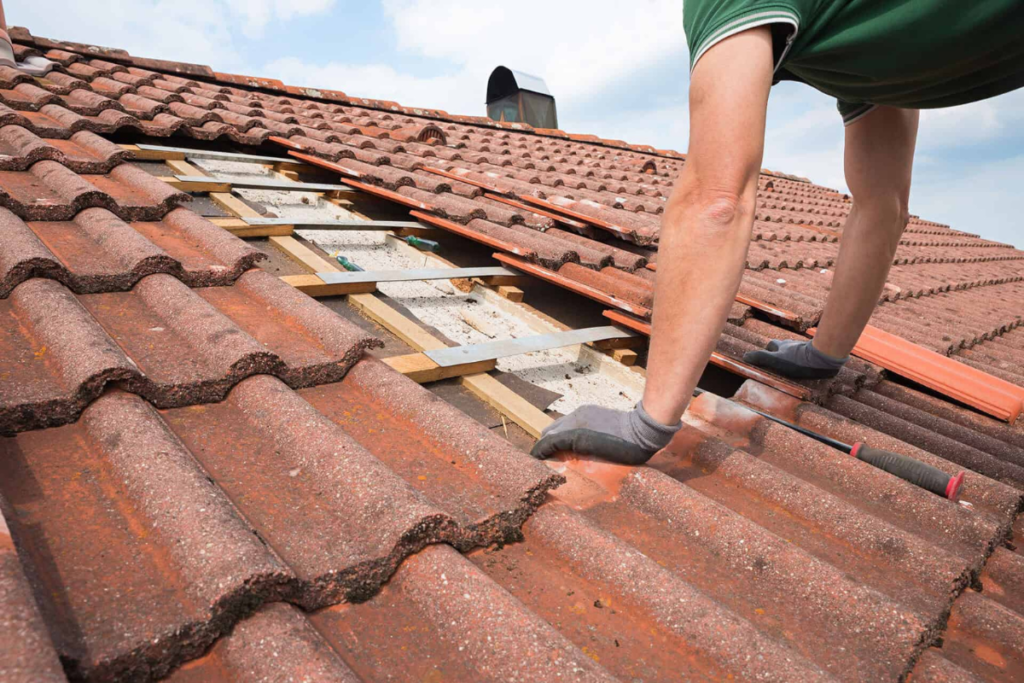
For example, you may only have a handful of damaged or missing tiles. In that situation, replacing the affected tiles may be enough to restore the roof’s weather protection.
Other problems that may be suitable for repair include:
- Localised roof leaks
- Cracked or slipped tiles
- Damaged slate
- Defective leadwork
- Problems around roof windows
- Localised guttering damage
- Damaged dry ridge or dry verge components
- Small areas of deterioration on a roof covering
The important point is to identify why the problem has occurred, rather than simply dealing with the visible symptom.
For instance, replacing a stained ceiling does not fix the roof leak that caused it. Likewise, repeatedly replacing individual tiles may not be the right long-term approach if the surrounding roof covering is also showing significant deterioration.
When Might Roof Replacement Be More Appropriate?
A roof replacement becomes a consideration when the problems are no longer limited to one or two isolated areas.
A roof can gradually deteriorate over time. Tiles or slates may become damaged, roof components can wear, and previous repairs may accumulate. Eventually, continually repairing individual defects may no longer be the most sensible solution.
Signs that a replacement may need to be considered include:
- Widespread damage across the roof
- Repeated leaks in different areas
- Significant deterioration of the roof covering
- Numerous damaged, slipped or missing tiles or slates
- Persistent problems despite previous repairs
- Extensive deterioration affecting associated roof components
- A roof that requires increasingly frequent attention
This does not mean that every older roof needs replacing. The condition of the roof matters more than simply its age.
A proper assessment should consider the roof covering, underlying construction and the condition of associated components before a homeowner commits to a replacement.
Five Questions to Ask Before Choosing Repair or Replacement
1. Where is the problem actually coming from?
A visible leak does not always originate directly above the damp patch inside your home.
Water can travel through roofing materials and along components before becoming visible internally. The first step should therefore be finding the actual source.
2. Is the damage isolated or widespread?
One broken tile is a very different situation from a roof with extensive deterioration.
If the issue is confined to a small area, repair may be appropriate. If similar problems are appearing throughout the roof, replacement may deserve consideration.
3. Has the roof been repaired repeatedly?
Previous repairs are not automatically a problem. Sensible maintenance can extend the useful life of a roof.
However, if you are repeatedly dealing with leaks or replacing damaged areas, it is worth stepping back and assessing the roof as a whole rather than treating each problem separately.
4. What type of roof do you have?
The appropriate solution depends partly on the roofing system.
A slate and tiled roof, pitched roof, flat roof, EPDM system or GRP roof can have very different repair requirements. A solution suitable for one roofing system may not be appropriate for another.
Home Pride Roofing Services Ltd provides roofing services including pitched roofing, flat roofing, slate and tiled roofing, EPDM and GRP.
5. What condition are the associated components in?
The roof covering is only one part of the overall system.
It is also important to consider areas such as:
- Fascias and soffits
- Guttering
- Leadwork
- Dry ridge systems
- Dry verge systems
- Roof windows
- Roofline components
For example, water entering around a roof junction may not mean that the entire roof needs replacing. The problem could be associated with localised leadwork or another component.
Don’t Judge the Roof From Its Appearance Alone
A roof can look tired without necessarily needing complete replacement. Equally, a roof can appear reasonable from the ground while having a hidden problem.
This is particularly important after periods of poor weather. Damage may not be obvious until water begins entering the property.
If you notice a potential problem, you can safely look for signs from ground level, such as:
- Missing or displaced tiles
- Visible gaps in the roof covering
- Damaged guttering
- Water staining around ceilings
- Damp areas in an accessible loft
- Problems around roof windows
- Loose-looking roofline components
Avoid climbing onto the roof yourself. Roof surfaces can be slippery and difficult to assess safely without the right equipment.
Repair or Replacement: Don’t Automatically Choose the Bigger Job
For homeowners, it is understandable to assume that a complete replacement must be the better long-term option. But replacing a roof when a straightforward repair is appropriate is not necessarily the right approach.
The opposite is also true. Choosing repeated small repairs when a roof has widespread deterioration can simply postpone the larger issue.
The sensible question is not:
“Which option is better?”
It is:
“What does the condition of this particular roof require?”
That means looking at the actual damage, the roofing materials involved and the wider condition of the roof before deciding what work is appropriate.
What About Flat Roofs?
Flat roofing requires its own considerations.
Home Pride Roofing Services Ltd provides flat roofing, EPDM and GRP services. If a flat roof is leaking, the cause should be established before deciding whether a repair or replacement is necessary.
A localised problem may be repairable, whereas widespread deterioration of the roofing system may require more extensive work.
The same principle applies: the visible leak is only part of the picture. The condition of the wider system needs to be considered.
What About Slate and Tiled Roofs?
Slate and tiled roofs can sometimes be repaired by replacing individual damaged units or addressing a particular defect.
However, if there is widespread deterioration, repeated failures or problems affecting a larger section of the roof, a more comprehensive assessment may be appropriate.
It is also worth remembering that roofing materials and components work together. Issues involving leadwork, dry ridge, dry verge, roof windows, fascias, soffits or guttering may need to be considered alongside the main roof covering.
Frequently Asked Questions
Is it cheaper to repair a roof or replace it?
A repair is generally a smaller scope of work than replacing an entire roof, but cost should not be the only consideration. The correct option depends on the extent and nature of the damage. Repeated repairs to a roof with widespread deterioration may not be the most practical long-term approach.
How do I know if a roof leak needs a repair or replacement?
Start by identifying the source and extent of the leak. A single localised defect may be repairable, while multiple leaks or widespread deterioration may indicate that more extensive work needs to be considered.
Does an old roof always need replacing?
No. Age alone does not determine whether a roof needs replacing. Its actual condition, the extent of deterioration and the performance of the roofing system are more useful factors when deciding what work is appropriate.
Can damaged tiles be repaired without replacing the whole roof?
In some situations, yes. If the damage is isolated, replacing individual tiles or addressing the specific defect may be sufficient. The surrounding roof should still be checked to make sure there are no wider problems.
Should I repair my roof before selling my house?
If your roof has a known problem, it is sensible to understand its condition before making decisions about the property. Whether repair or replacement is appropriate depends on the actual issue and the work required.
Get the Roof Assessed Before Making a Decision
The choice between roof repair or replacement should be based on the condition of the roof rather than assumptions.
A cracked tile, isolated leak or damaged piece of leadwork may require a relatively focused repair. If problems are widespread or recurring, a more comprehensive solution may need to be considered.
Home Pride Roofing Services Ltd provides roofing services across Frodsham, Cheshire, Greater Manchester and surrounding areas, including roof repairs, new roofs, flat and pitched roofing, roofline, fascias, soffits, guttering, roof windows, slate and tiled roofing, EPDM, GRP, leadwork and dry ridge and dry verge.
If you have noticed a roofing problem but are unsure whether it needs a repair or something more extensive, getting the condition properly assessed is a sensible place to start.
For more information about Home Pride Roofing Services Ltd and its roofing services, visit the Home Pride Roofing Services Ltd.